Opinions
What Did the Six Fingers Say to the Face!? A Slap and a Revelation About AI’s Next Era for Marketers
From six-fingered hands to scary-good visuals, learn how AI image generation is evolving and how marketers can create consistent, on-brand creative without losing their sanity.
If you have been online longer than a TikTok loop, you already know the image manipulation era has been . . . unhinged. Fake celebrity cameos. Puppies the size of Tic Tacs. Hands that look like they were sketched by someone who has never actually seen a hand. Not long ago, AI struggled to produce five fingers without summoning an eldritch creature. Today, these models are borderline photorealistic. Mostly. Kind of. Depending on the model and your blood pressure.
I have spent the past few months stress testing image models so intensely that my screen time report looked like a cry for help. AI image generation is magical and maddening at the same time. It can supercharge your creativity, or it can make you question the very fabric of prompt engineering reality. Especially when your deliverables need to be on brand, high performing, and worthy of real marketing spend.
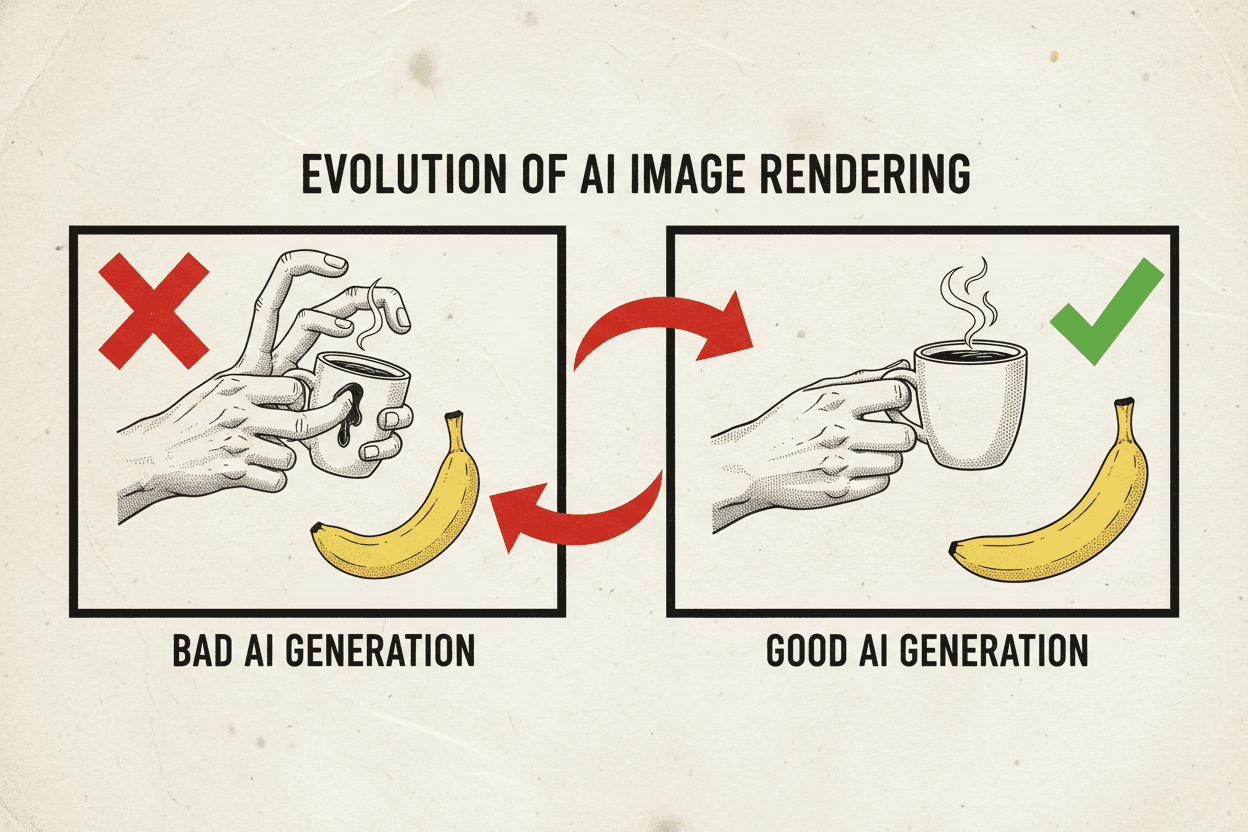
Leading the AI content studio for Backstroke gave me a front row seat to what e-commerce brands actually need from generated imagery. And let me tell you, we have officially left the era of “Oh yeah, that is definitely AI” and entered the “Wait . . . that is AI?” dimension.
From Close Enough to Scary Good
AI models have leveled up. Faster renders. Smarter logic. Cleaner typography. Better spatial awareness. Faces and products land where they’re supposed to. Lighting is intentional. Depth makes sense. The uncanny valley is becoming prime real estate.
But here is the twist. Even with all these advancements, AI is not replacing creativity. It is amplifying it. Someone still has to curate, refine and shape these images into revenue generating assets. Technology fills in the pixels. Creative direction fills in the soul.
I have spent four years watching these tools evolve while partnering with companies to build interfaces they once considered impossible. I have studied where models excel and documented where they faceplant with full commitment.
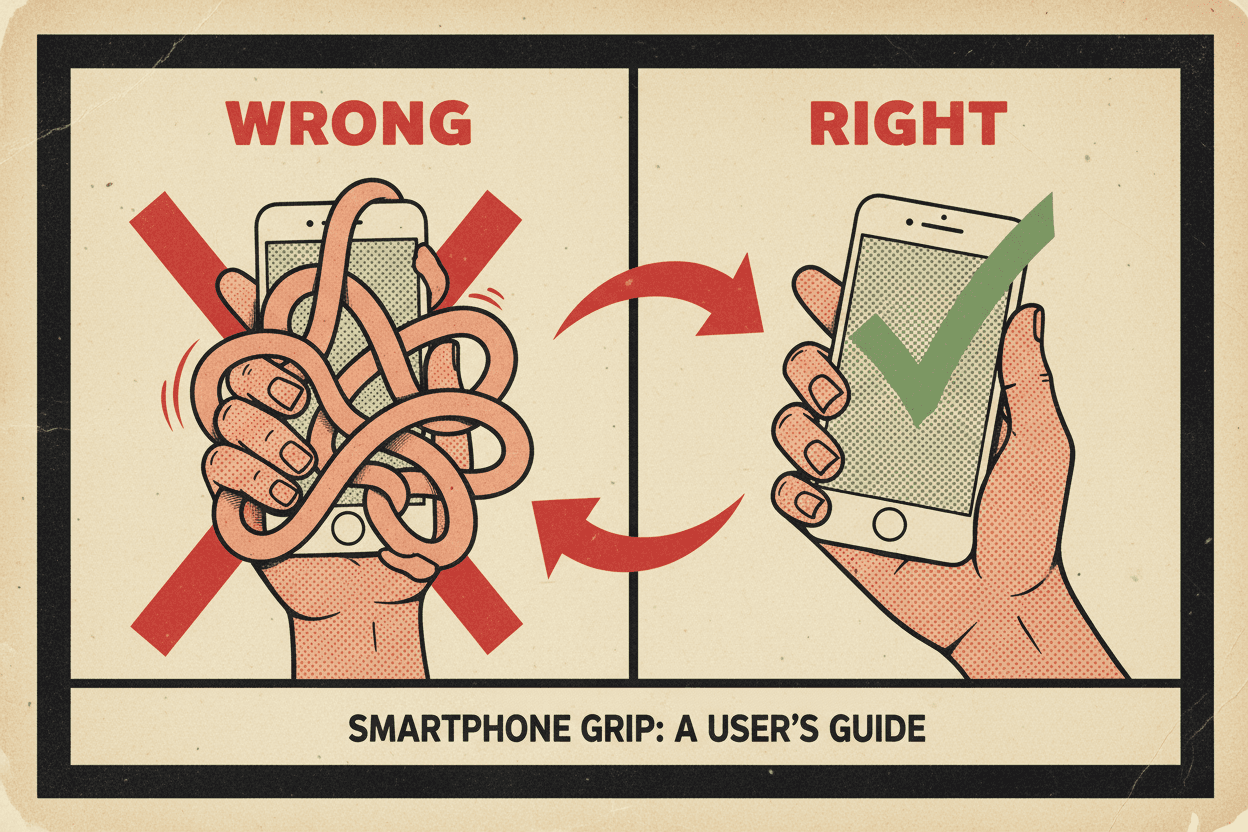
What Do Designers Actually Need? Not Perfection. Consistency.
Designers do not need flawless images. They need consistency, brand adherence and production speed. The real bottleneck is product accuracy and brand fidelity. Most models are optimized for “pretty images,” not usable campaign assets.
To get consistency, you need a brand configuration. This means training the model on:
Past campaigns
Your brand’s visual language
Tone of voice from social channels
The personality of the models used
Camera types
Lighting styles
Typography systems
Composition rules
This is all creative detective work. And honestly, it is fun if you are an AI junkie like me!
But flexibility matters too. The system needs the freedom to explore new layouts and typography approaches while remembering that it cannot wander outside the brand palette like a toddler in Target.
“Hey, no, put that down!”
Why Marketers Should Care. More Creativity. Less Overhead.
AI unlocks creative expansion without the logistical nightmare of photoshoots.
Imagine:
Rapid concept prototyping
Instant seasonal variations
Mood board hero images
Significantly easier campaign experimentation
Thousands saved on photography, models and sets
The goal is not to replace photography. The goal is to extend creative capacity while eliminating the “forty tabs open, six hours gone, still no hero image” struggle.
Designers get to step into their true role: Creative directors, not asset archaeologists.
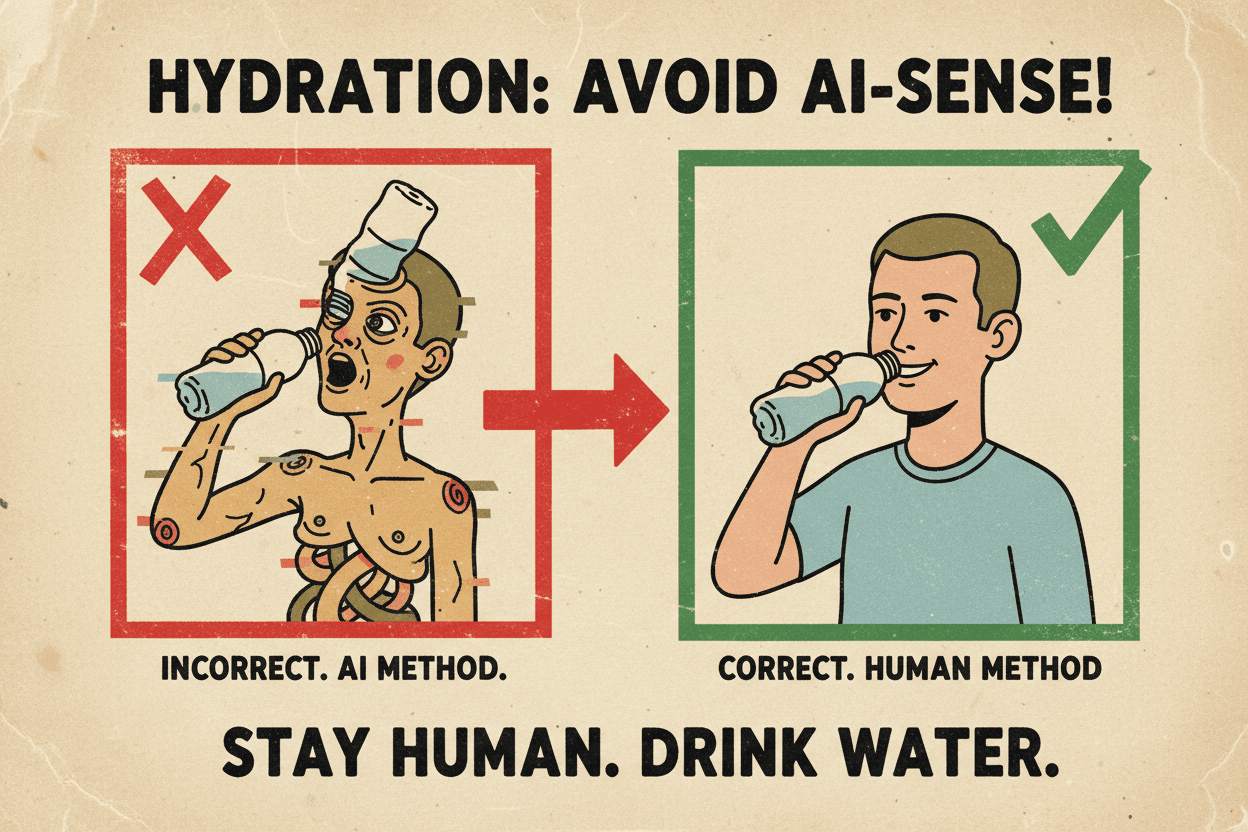
The New Problem: Images That Look Too Good
We went from “this looks fake” to “this looks like it was generated inside a sterile lab with no air molecules out of place.” Now the challenge is injecting humanity back into perfection.
Models must be trained to:
Match your own creative tone
Reflect campaign history
Mirror brand photography style
Understand typography systems
Camera angles. Product labels. Lighting fidelity. All of it matters.
Marketers cannot afford imagery that misrepresents the product. That journey from ad to product page needs to feel identical. And even when an image is ninety percent there, that last ten percent often requires an AI editor or human eye to land correctly.
Avoiding the Prompt Engineering Spiral: Because Creative Fatigue Is Real
AI is powerful enough to keep you iterating forever. You blink and somehow you have 26 variations of a product the brand has not even released yet.
To protect your sanity throughout your AI image design process, I recommend to:
1. Save everything. Yes. Everything. Future you will be grateful.
2. Build a brand go-to document. This is an aesthetic cheat sheet that defines: Colors, model types, camera angles, typography rules and composition notes.
3. Keep a reference library. This is a mood board folder the AI can use for grounding.
4. Learn your model stack. Know which models handle people well, which models handle text well and pair them for maximum performance.
5. Keep ongoing notes. Your master brand doc should evolve like a living style guide.
The days of needing hours of training to get one product rendered correctly are behind us.
Shhh . . . It’s Secret Tip Time.
Here’s the part you absolutely did not hear from me:
Feed your AI a catalog of past campaigns and ask a vision model to describe your brand aesthetic back to you. It will give you a surprisingly accurate generative brand bible ready for future campaigns.
Want another one? Okay, this is just between us: Variations are royalty.
If you nail an on-brand image, DO NOT reprompt. Run variations of it. Use editing models to A/B test: Hair color, lighting, time of day, environments and product colorways.
You will find your highest-performing creative directions faster than ever.
Inside Backstroke’s AI Content Studio
This is the engine behind the magic.

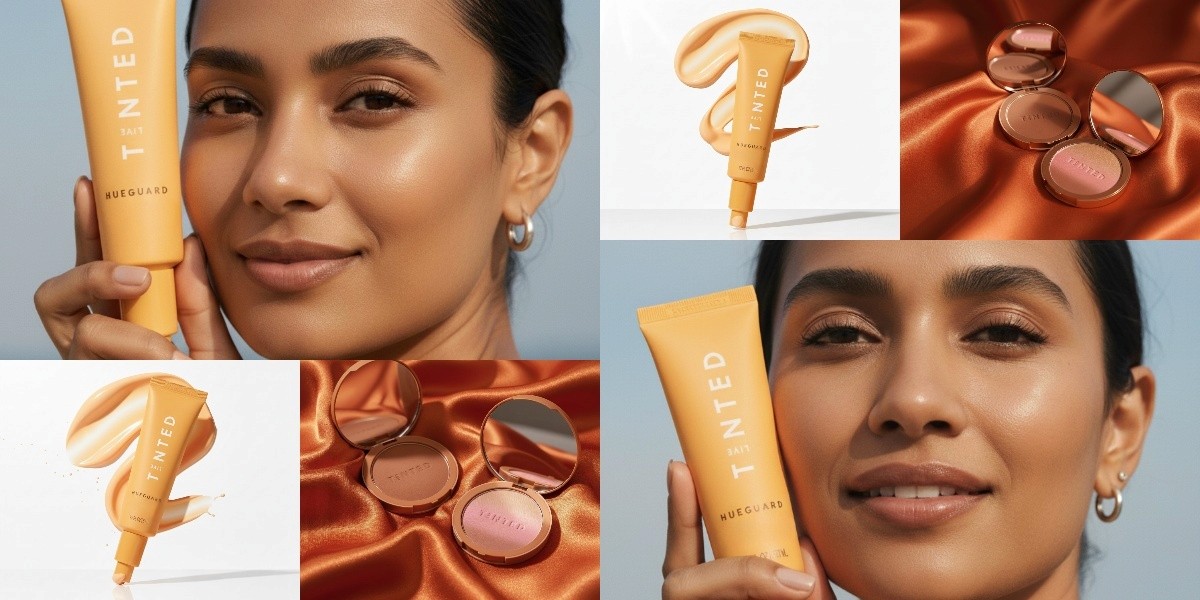
(Campaign creative generated by AICS)
We condition our models on brand colors, lighting systems and photography style to produce stunning consistency across variants.
Our agentic workflow pairs AI copywriters with AI designers. It functions like a hybrid creative team that never sleeps and never argues over font choices. The result is high quality, on brand hero images and product visuals that elevate email and paid campaigns instantly.
And trust me, it is only getting better.
Actually no. It is getting a little scary.
(Disclaimer: A handful of engineers were harmed during my research.)