Events
Longaxis 2026 Recap: 5 Big Takeaways from the Top Folks in DTC
Longaxis 2026 recap: 5 AI and DTC takeaways from 110+ eCommerce and retention leaders gathered in New York City for a day of keynotes, panels and roundtables.
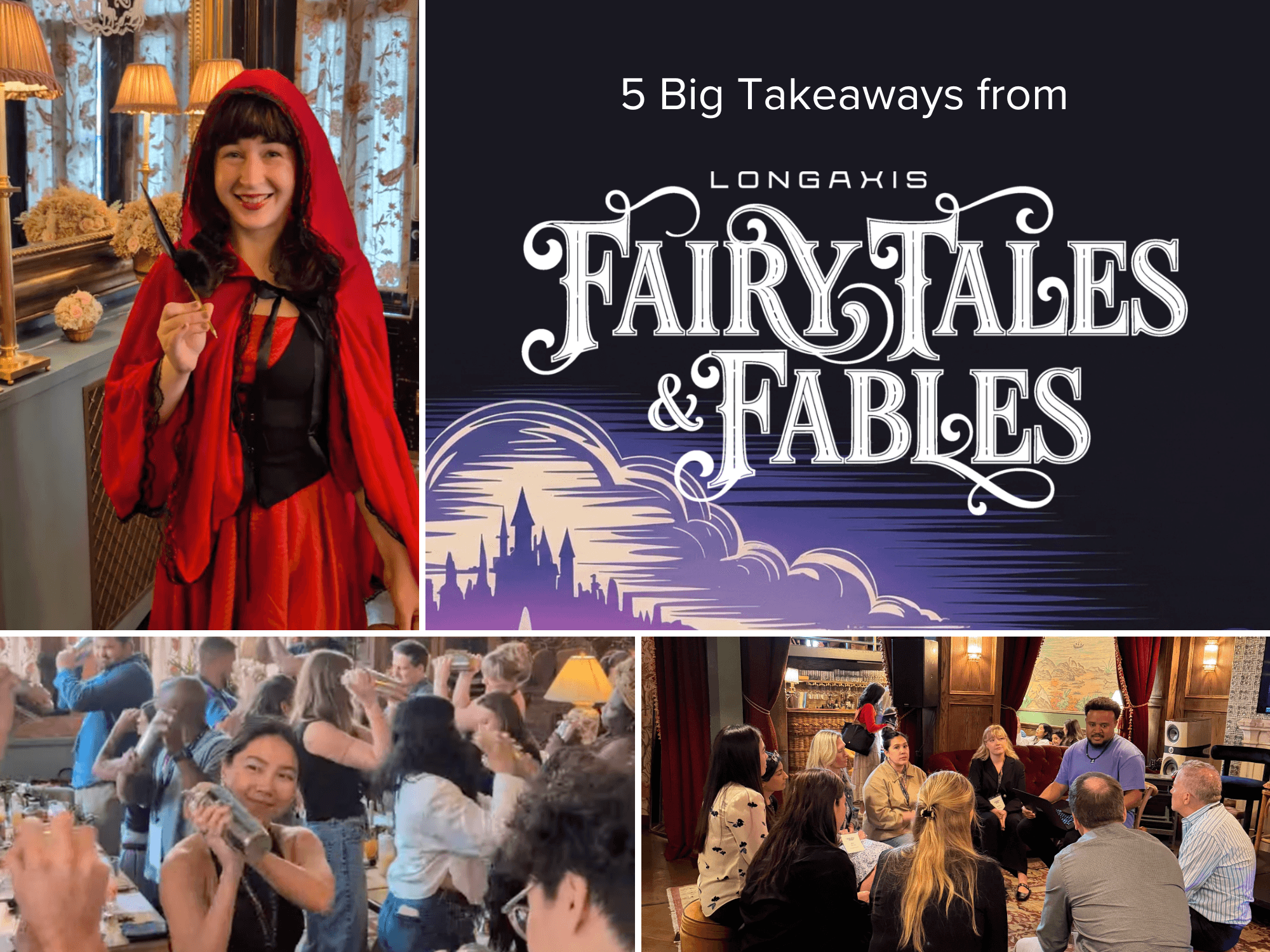
The second annual Longaxis conference was just held in NYC. One hundred and ten of the sharpest operators in DTC walked into Maxwell Tribeca, through a secret door, and into the best day we've ever built. Here's what the room taught us.

1. Nobody has everything figured out. And that's the point.
Backstroke Founder and CEO, R. J. Talyor, opened the booklet with three questions that stopped people cold:
What does my team look like in a year?
Which of my skills still matter?
How do I lead through something I don't fully understand yet?
The most honest moment of the day was the collective exhale when the room realized everyone was sitting with the same uncertainty. As AI changes every day, so do our reactions to it, as well as our business implementations. Overall, the simplest takeaway is that AI capability is improving on a months, not years, timeline.
Longaxis exists for the people pushing it ahead to come together and say what they actually think, how they’re planning to move forward and what possibilities they may theoretically—or realistically—face this year.
Look ahead: The brands that win the next chapter will be the ones who build cultures where it is safe to not know things yet.
2. Behavior tells you what. Demographics tell you who. You need both.
Morgan Decker of Customers.ai hosted a roundtable—The Glass Slipper: Why Perfect Fit Starts with Who, Not What—which surfaced one of the day's most actionable tensions. Most email programs are built entirely on behavioral signals like clicks, browses and purchase recency. But demographic data—detailing who your customers actually are as people—is sitting largely unused.
Data backs this up, too. Email segmentation based on demographics yields 15% higher open rates and up to 3x more revenue than generic broadcasts. Blending the two leads to smarter targeting and more human-centric marketing.
Look ahead: The next frontier in personalization blends behavioral data with all the other data points you may have been ignoring.
3. Your AI stack is only as strong as your identified audience.
David Cimaglia of Retention.com and Brian Hashemi of UncommonGoods ran the Straw, Sticks or Bricks roundtable on building AI-powered retention from the ground up.
Its through-line was clear. Most brands are stacking AI tools faster than they're building the foundation those tools need to perform. Personalization engines, predictive flows and AI-generated content all work better when you know who you're actually talking to. Audience identification is both a prerequisite for AI and a results multiplier.
Look ahead: Before adding another tool to your stack, ask how much better every tool you already have would perform with a bigger, more accurate owned audience.
4. Static dashboards are obsolete, though most people just haven't admitted it yet.
Chris Miller of Flaunt and Bridget Allison of Beam hosted the The Looking Glass roundtable, one of the most hotly requested tables of the day, and the conversation didn't disappoint.
They covered how the ways we interact with data is changing faster than our reporting infrastructure. AI-powered, chat-based analytics inside tools like Klaviyo are the most accurate solutions available and they’re already here.
Look ahead: The next generation of analytics won't be a report you read. It'll be a conversation you have with up-to-the-minute accurate AI.
5. The best conferences feel like field trips.
Paul Sutter closed the day by doing what only a cosmologist can: making the universe feel directly relevant to your Q3 retention strategy.
Scientists have been using AI as a research tool for decades. The rigor they bring—hypothesis, test, iterate, don't fall in love with your assumptions—is exactly what most marketing teams are missing in how they approach AI implementation. Just as takeaway #1 says that the best teams don’t know everything yet, the scientific method and Sutter’s approach to AI expands on that concept. It’s ok to not know, and the only way to find out what works is to express your curiosity, experiment and learn something new.
Look ahead: The best thinking about AI in DTC isn't coming from Silicon Valley visionaries, but from the people who've been building with it in contexts they’d never considered, getting their hands dirty, learning and applying their findings . . . and having a little fun along the way.