Strategy
Beyond Demographics: Advanced Segmentation for Email Personalization at Scale
Explore advanced email segmentation techniques using behavioral data and predictive modeling to power personalization at scale. See how ThirdLove increased revenue 25%.

In the age of intelligent inboxes, simply lumping subscribers into broad buckets like “women 25–34” or “Midwest families” no longer cuts it. 71% of consumers say they expect personalized communications and product offerings from brands. They want messages that reflect both their behaviors and their future intentions.
Psychics aren’t needed to uncover a subscriber’s likely next steps though.
Rather, advanced segmentation marketing strategies combine behavioral data, predictive modeling techniques and AI‑powered creativity to deliver hyper-relevant messages at scale. Backstroke’s ThirdLove case study (more on that below) shows how investing in advanced segmentation cuts through competitive noise and picky inboxes to deliver exactly what ecommerce brands care about most: revenue.
Setting the Stage: Segmentation vs. Personalization
Before diving into email segmentation tactics and success stories, it’s important to review a few definitions.
Segmentation means dividing your subscribers into groups that share attributes like location, purchase history or device. This approach typically increases email contents’ relevance, as segmented emails generate 14% more opens and 2X higher CTRs, compared with generic blasts.
Personalization, by contrast, tailors email messaging to individuals—incorporating their names, past purchases or browsing behaviors. Targeted personalization raises engagement too, as 74% of marketers report higher customer engagement and around 20% sales uplift when sending personalized emails.
Combining segmentation and personalization is the ultimate email marketing power combo. Segmentation sets the stage by ensuring you’re talking to the right group, while personalization fine‑tunes the message for each subscriber.
“Backstroke took (using subscriber data) a step further by helping us understand not just who to talk to, but how,” said Leanne Chan, Sr. Director, Retention and Performance Marketing at Thirdlove, when describing combining the two techniques.
Truly, their synergy is the foundation of personalization at scale.
Demographics alone fail to reflect engagement. Inboxes now employ AI to prioritize relevant messages and success is measured by deeper engagement metrics like scroll depth and revenue per subscriber. To truly resonate, marketers must go beyond surface‑level attributes and incorporate behaviors, preferences and intent signals.
That’s where advanced segmentation—grounded in behavioral, predictive and contextual data—comes in. So let’s look at a few ways to approach advanced segmentation in your email program.
4 Advanced Segmentation Strategies to Use In 2026
Email Segmentation Strategy #1: Behavioral & Lifecycle Segmentation
A subscriber’s actions are often more telling than their age, gender or location. Grouping customers by categories like those below allows marketers to tailor messaging to subscriber intent:
Engagement level: active vs. infrequent vs. dormant
Purchase frequency: loyal vs. lapsed (and how loyal they are on a sliding scale)
Lifecycle stage: prospect, new buyer, repeat buyer, etc.
Each of these categorizations—and each combination of them—warrants different messaging. Studying these behaviors can lend clarity on whether urgent calls‑to‑action, product comparison guides, re‑engagement incentives or loyalty rewards are most suited for different subscriber segments.
Email Segmentation Strategy #2: Predictive Segmentation & Dynamic Clustering
Predictive segmentation uses historical purchase and engagement data to model the likelihood of future actions. It predicts the likelihood of behaviors, like conversions or churning.
Fascinatingly, predictive clustering adapts in real time as new data enters its system, constantly refining segments, outputs and creative choices. For example Backstroke’s predictive models are trained on data from more than 20,000 brands, lending industry‑specific context that generic tools cannot match.
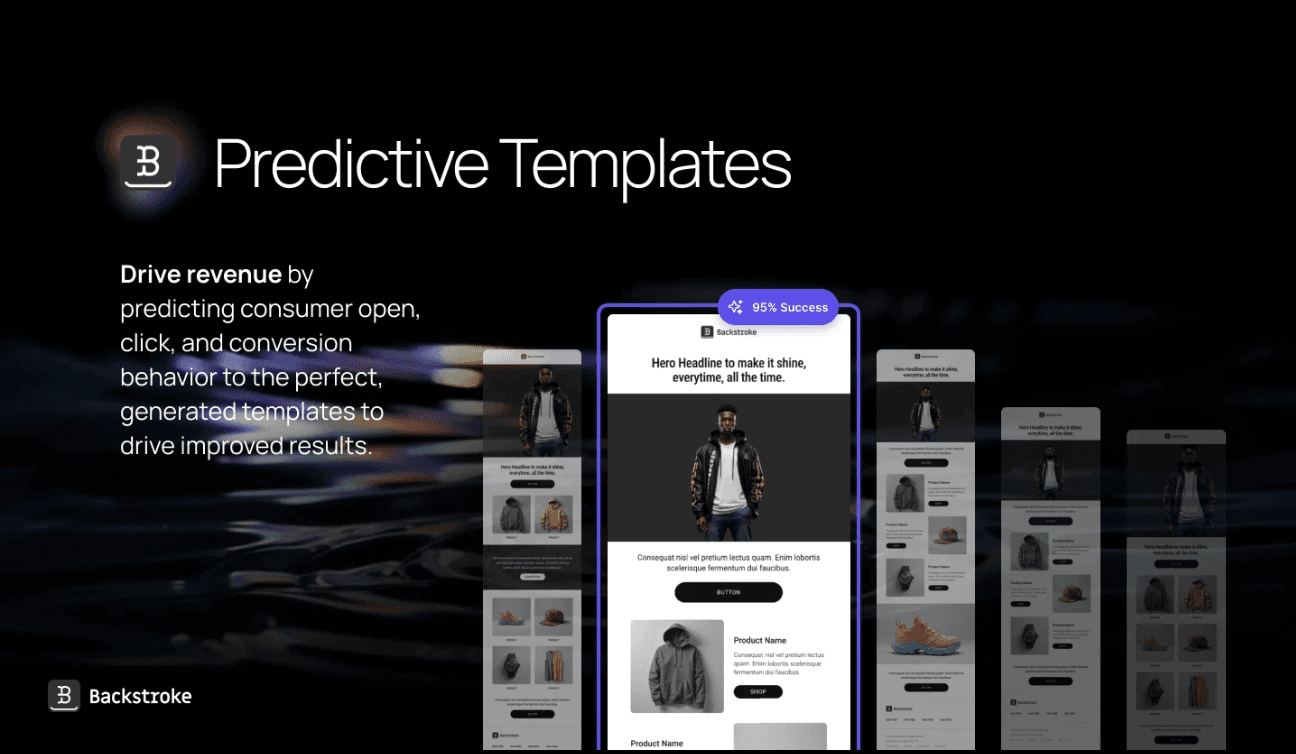
These models then feed into Backstroke’s Predictive Template Agents, which divide subscribers into clusters based on purchasing behavior, email engagement and demographic attributes. It then dynamically generates the best visuals and template combinations for each of these subscriber types. In fact, our system is pre-loaded with over 75 template variations, each of which are optimized to drive everything from engagement to sales.
Email Segmentation Strategy #3: Dynamic Engagement Scoring
Where traditional segmentation divides subscribers once, dynamic engagement scoring updates a subscriber’s segment based on real‑time behavior. Opening, clicking, purchasing and unsubscribing all influence a customer’s score, which determines their messaging cadence and content.
For example, first‑time cart abandoners might receive gentle reminders, while serial abandoners might see dynamic discounts. These real‑time triggers ensure that communications remain relevant, no matter the subscriber’s behaviors.
Email Segmentation Strategy #4: Cross‑Channel Cohort & Contextual Segmentation
Today’s customers interact with across nine different channels on average. Cross‑channel cohorts unify behavior from email, web, social media and SMS to deliver consistent experiences. Cohort segmentation ensures that a customer browsing athletic wear sees complementary cross‑sell recommendations via email and receives timely restock alerts via SMS.
This contextual segmentation adds another layer by factoring in device type, time of day, location and even weather. For example, Backstroke’s subscriber survey revealed that around 60% of iPhone users preferred emojis in subject lines, while most Android users preferred plain text. Accounting for such context can lift engagement and conversion rates, if you tailor your creative correctly per message and per cohort.
Deep Dive: ThirdLove’s Predictive Template Agents
ThirdLove, a DTC apparel brand known for inclusive sizing and data‑driven fit, has been investing heavily in segmentation. Before partnering with Backstroke, their email marketing team had segmented its audience by engagement, purchase history and lifecycle stage.
Despite their great efforts in segmenting audiences, ThirdLove sent the same email template to everyone.
To see whether template variations could improve results, ThirdLove and Backstroke conducted a 50–50 split test across 1.6 million subscribers. The control group received their standard template, while the test group was divided into four predictive clusters determined by purchase behavior, email engagement and demographic attributes. Each cluster received a unique template tailored to its predicted preferences.
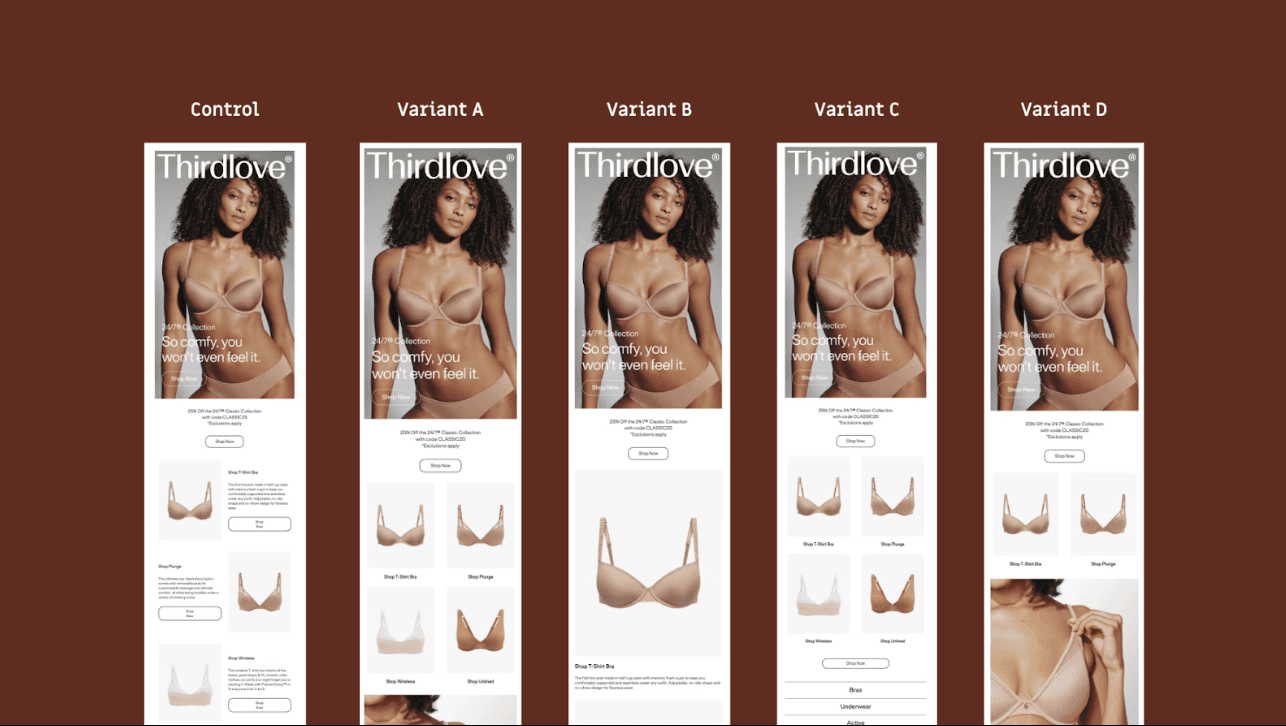
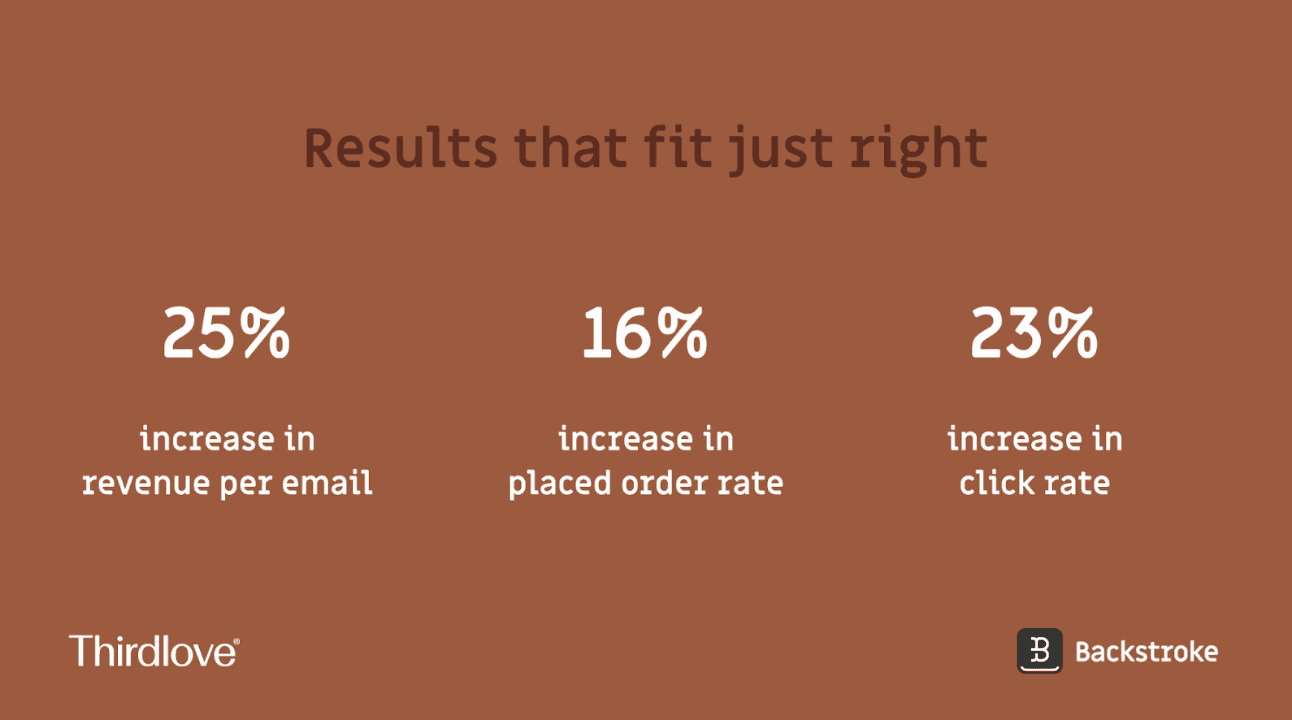
The test’s outcomes were striking. Revenue per recipient increased 25%, placed order rate rose 16%, and click rate jumped 23%, because Backstroke showed ThirdLove “not just who to talk to, but how to talk to them.”
Armed with these insights and advanced segmentation and predictive modeling technology, the brand plans to expand predictive templates to more campaigns and seasonal promotions. Their story illustrates that predictive modeling and dynamic content can meaningfully improve performance—and not just open or click rates—but actual revenue.
Implementing Advanced Segmentation with Backstroke
Backstroke’s L5 Agentic Engine makes advanced segmentation practical for busy teams. The engine uses multi‑agent planning to build fully dynamic, on‑brand emails generated from a simple creative brief. It drafts content, assembles layouts and refines designs automatically.
Predictive template agents also test multiple creative variants per segment, learning which layouts, hero images and copy styles drive the best results. And while AI is used for ideation and variation, humans are kept in the loop to review outputs and ensure messages fit their brand voice and creative strategies.
Understanding subscribers’ demographics is a starting point, yes, but it’s just the beginning of what makes for a great email marketing program.
Advanced segmentation—incorporating behavioral, predictive and contextual data—allows marketers to reach the right people with the right message at the right time. That’s why Backstroke’s customers see 31% more revenue per send on average, with some achieving even larger gains.

