Insights
Metrics That Matter: How Retail Marketers Will Measure Email Success in 2026
Email success metrics are changing in 2026. Learn which KPIs actually matter—revenue, retention, engagement—and how AI helps retail marketers win.

Email marketing in 2026 could also be called The Great Success Metric Switch Up. Old indicators of success—like open rates and click thru rates—don’t prove your message’s success. Rather, there are some new success metrics in town and email provider updates making them more important than ever.
Tracking tools like Apple Mail Privacy Protection (MPP) are artificially inflating opens. Sadly, this means that if you’ve noticed your open rates inexplicably skyrocketing, it’s not that your content suddenly got 10X more compelling. Instead, Apple’s likely doing the heavy lifting.
We see similar stories across other inboxes as well.
Algorithms are sharpening. Gmail’s new Gemini‑powered summary cards generate AI summaries above long emails, while their Manage Subscriptions tool lists every sender by frequency and lets recipients unsubscribe with a single click. Apple, Gmail and Outlook also factor in engagement signals like scroll depth, reply rate and deletion patterns to decide whether your email lands in the primary tab or the promotions graveyard.
If 2025 was the year of AI email generation, 2026 is the year of AI‑compliant metrics.
2026 Email Marketing Metrics That Matter Most
Email Success Will Be Measured By Revenue‑Oriented Metrics.
Revenue per Email Send (or per Recipient)
What it is: This is the average revenue generated per email you send to each subscriber. Simply put, it answers the question, “Is my email program actually making money?”
Why it matters: In an era where open tracking is broken and deliverability depends on engagement, revenue per send cuts straight to the bottom line. It’s immune to inflated opens and discounts superficial metrics like list growth or total sends. Therefore, if you’re sending fewer, more relevant emails, your revenue per send should go up.
How to improve revenue per send or revenue per recipient:
Segment aggressively. Use behavioural data (browsing, purchase history) and predictive models to group subscribers by intent. Sending everyone the same coupon might boost opens, but personalizing offers to each cohort drives higher revenue (up to 760% more revenue, in fact, according to Porch Group Media).
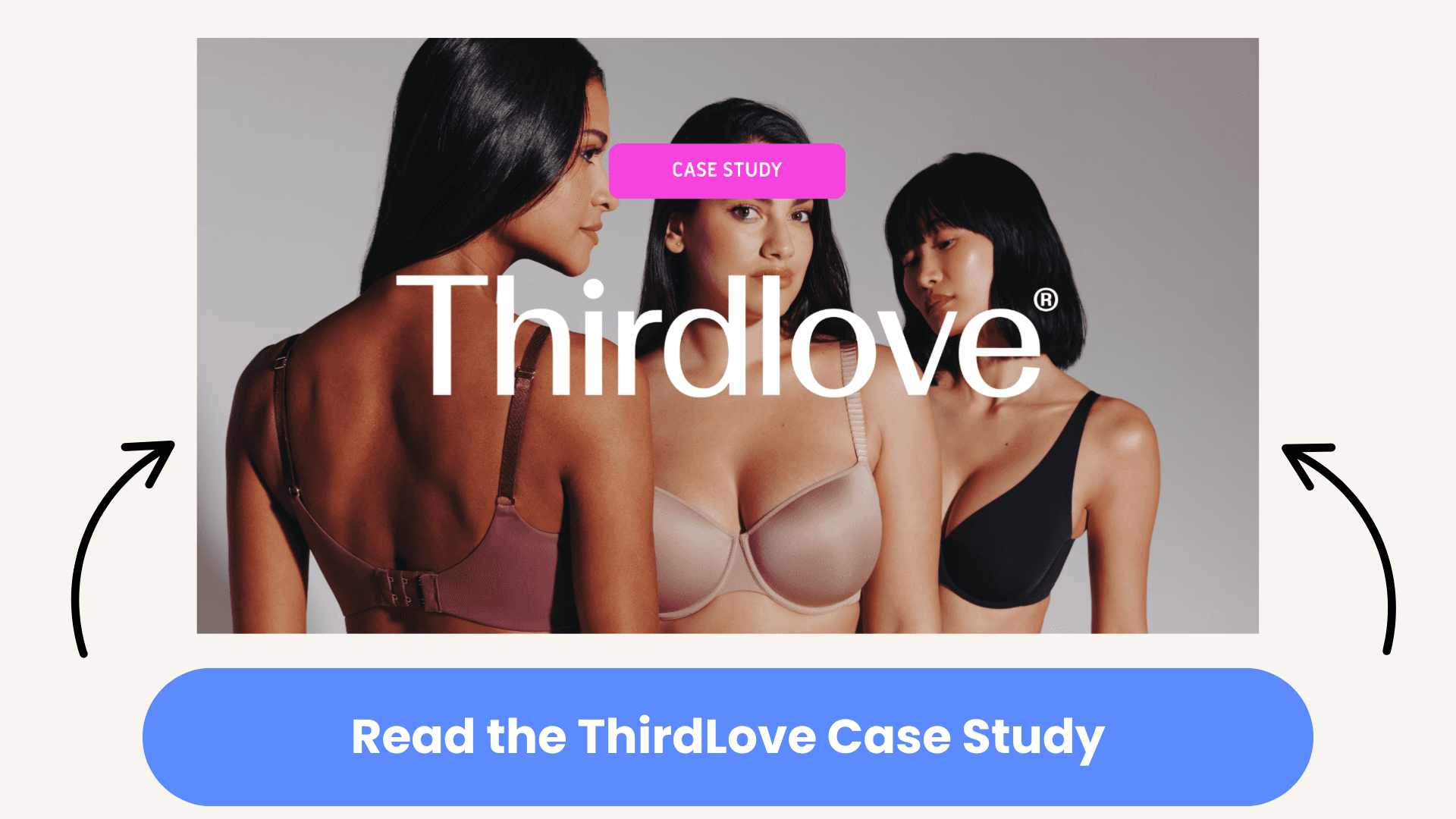
Use AI‑driven content. The best email tools generate on‑brand email content that’s tuned to your audience segments. By letting AI handle the heavy lifting of determining what content works for who, you can test multiple creative versions per segment. Check out our case study with ThirdLove, which shows proof that segmentation and personalized message variants literally pay off.
Focus on quality over quantity. Resist the urge to regularly blast your list. With Gmail’s Manage Subscriptions showing how often you send, staying within your subscribers’ preferred cadence preserves your reputation, and ultimately, your revenue.
Conversion Rate from Email
What it is: This is the percentage of email recipients who complete a desired action, such as placing an order, joining a loyalty program or downloading a guide.
Why it matters: Unlike simple clicks, conversions tie directly to business impact. Open rates can be inflated and clicks can indicate curiosity, but conversions mean money.
How to improve conversion rates in emails:
Build behavioral segments. Group subscribers by purchase history, browsing patterns or predicted customer lifetime value. Send them targeted offers that match their interests and spend levels. Personalized email content delivers 6X higher transaction rates than generic blasts.
Automate triggered workflows. Transactional and lifecycle emails (welcome, post‑purchase, reactivation) often achieve conversion rates far above one‑off promotional sends.
Test creative formats. Different customer segments respond to different email layouts (think image‑heavy vs. copy‑heavy vs. hero‑product focuses). Create and test success of different design variants to learn how various list segments prefer to visualize your email content.

Average Order Value (AOV) from Email
What it is: This is the average dollar amount spent per order, generated from your email campaigns.
Why it matters: Raising AOV can dramatically increase revenue without increasing send volume or subscriber count. If each customer spends more, your revenue per send goes up and your cost per conversion goes down.
Strategies to raise average order value from emails:
Cross‑sell and upsell smartly. Use purchase history to recommend complementary items. A shopper buying a workout tank might also want the matching leggings or socks.
Bundle offers. Create packages (e.g., “3‑for‑$99” or “Buy X, get Y at 50 % off”) to encourage multi‑product purchases. Strategic product bundles and volume discounts can boost average basket size by up to 30%.
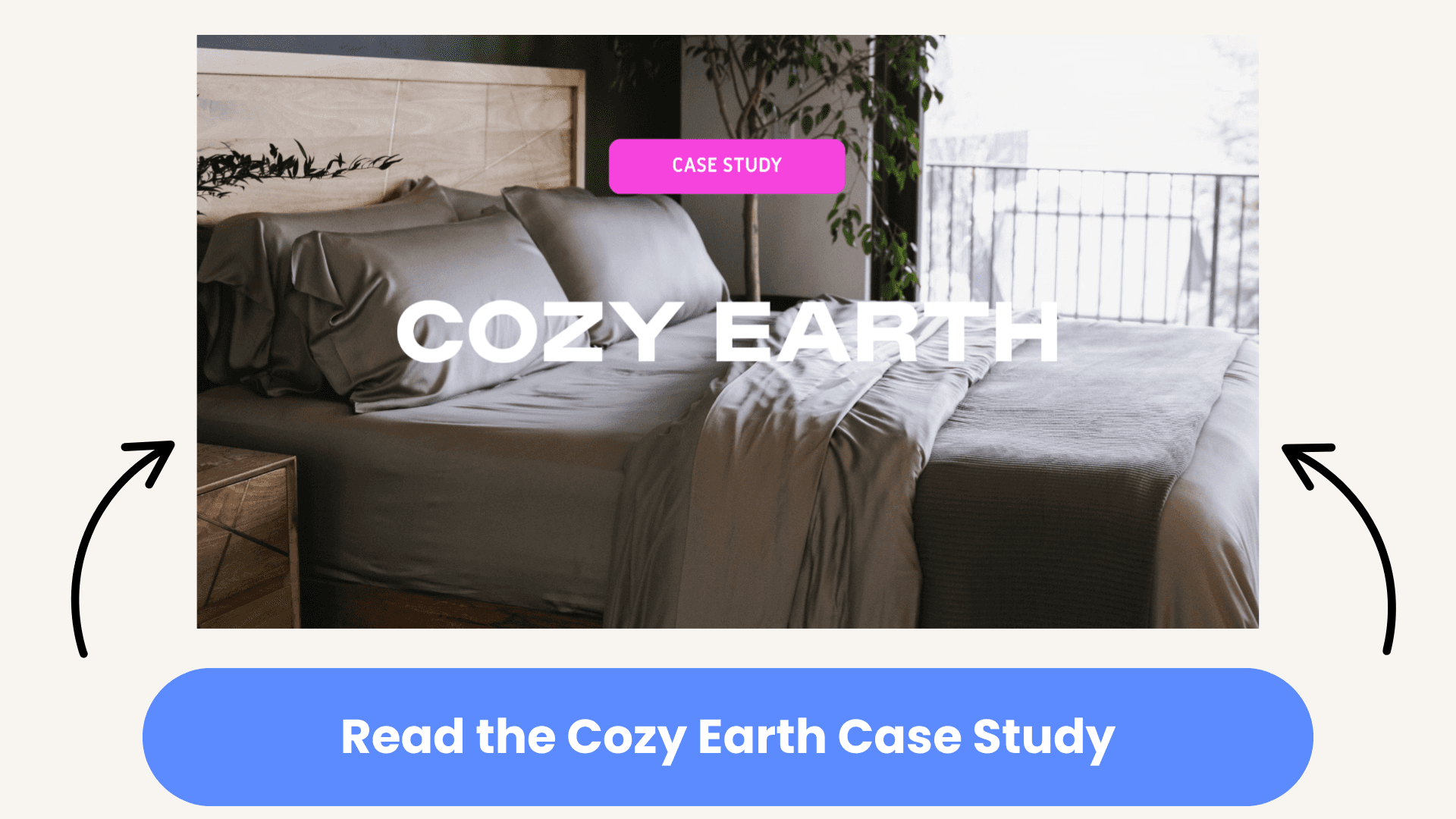
Personalize the pitch. Create customized product recommendations and subject lines that highlight complementary items. Predictive email templates generate the best visuals and template combinations for each subscriber type, with optimized content to drive everything from engagement to sales. In fact, our customer Cozy Earth used predictive content to drive 9% more revenue per email.
Retention Rate / Repeat Purchase Rate Among Subscribers
What it is: This is the percentage of subscribers who make another purchase within a given timeframe. It reflects how well you nurture customers after their first buy.
Why it matters: Retaining existing customers is cheaper than finding new ones. Plus, returning customers often have higher AOV and lifetime value.
How to improve retention rates:
Post‑purchase nurture series. Send customers a thank‑you email, tips about their purchased items and a feedback request. Follow up with personalized recommendations or loyalty program invites.
Win‑back campaigns. Identify lapsed customers and entice them back with special offers or relevant content.
Customer Lifetime Value (CLV) Influenced by Email
What it is: This is the total revenue a customer generates for your brand over their entire relationship with you.
Why it matters: CLV helps you understand the long‑term impact of marketing and retention efforts. It informs how much you should invest in acquiring and nurturing customers.
How to improve customer lifetime value:
Segment by lifecycle stage. Identify your high‑value customers (VIPs) and give them exclusive perks. For newer customers, send welcome series and educational content to nurture trust.
Integrate email with CRM. Use purchase data and engagement metrics to predict CLV and adjust your messaging strategy accordingly.
Trust in data that powers unique customer insights. Backstroke’s generative AI uses first‑party and proprietary data to deliver content that maximizes CLV across email and SMS. It can identify upsell opportunities and determine when to send a discount vs. full‑price message.
Email Engagement Metrics Will Go Far Beyond Opens.
Click‑to‑Open Rate (CTOR)
What it is: This is the ratio of unique clicks to unique opens. It measures how compelling your content is, once the recipient opens your email.
Why it matters: With Apple MPP inflating opens, CTOR provides a more accurate signal of engagement. If your CTOR is declining, it could be a sign that your subject lines are enticing, but your content fails to deliver.
Best practices:
Place your primary call‑to‑action (CTA) near the top of the email, so it’s visible without scrolling. Design mobile‑first, using large buttons and clear copy.
Test different copy tones, lengths and button styles. Backstroke’s AI subject line generator and email builder can spin up multiple variants in seconds, letting you A/B test at scale.
Tell a concise, coherent story. Gemini AI summaries extract one or two key sentences, so if your core value proposition isn’t clear, Gmail may summarize your email incorrectly.
Read Time & Scroll Depth
Why they’re important: Gmail’s algorithms consider engagement signals like scroll depth, reply rates and deletion patterns when determining how to prioritize your inbox placement. Emails that are quickly deleted or barely scrolled through get deprioritized.
How to optimize for read time and scroll depth:
Front‑load key information. Gemini’s AI summary looks for clear value propositions, specific dates, deadlines and calls to action. Put these critical bits of information at the top of your email. A lengthy story can get buried by AI summarization.

Use structured formatting. Headings, bullet points and bold text help both human readers and AI systems parse your content. Email layouts with hierarchies that clearly emphasize critical info, and reduce competing “read more” distractions, have produced click‑through lifts of around 42%.
Keep copy concise. Aim for short paragraphs (one to three sentences) and avoid burying your offer under fluff.
Unsubscribe Rate & Spam Complaints
Why they’re important: Besides being a long‑term business risk, high unsubscribe and spam complaint rates now have immediate deliverability consequences. Gmail’s Manage Subscriptions one-click unsubscribe button means that over‑sending directly jeopardizes your inbox placement.
Hubspot says that 51% of consumers unsubscribe because emails come too often, while 17% leave when content arrives more than once a week. 2026 email updates make it easier than ever for your messages to get the evil, unsubscribing eye.
How to reduce unsubscribes & spam complaints:
Optimize send times and frequency. Use AI to identify when each segment wants to hear from you. If someone routinely opens weekend emails, don’t bombard them midweek.
Maintain list hygiene. Regularly purge inactive subscribers.
Match subject line to content. Misleading subject lines lead to spam complaints. Gemini AI and other filters will expose these mismatches.
Spam Complaint Rate
Why it matters: Spam complaints tank your sender reputation and can land all of your emails in spam . . . not just the offending campaign.
Best practices:
Use clear, honest subject lines that reflect the email’s content.
Offer easy unsubscribe links and honor them immediately.
Avoid deceptive tactics, hidden opt‑ins, bait‑and‑switch promotions and generally bad AI slop content.
It’s Time to Measure What Matters
Vanity metrics are out. Metrics that measure true dollars and engagement are in. With Apple skewing open rates and Gmail surfacing only the most engaging messages, brands that cling to only caring about inflated open rates will be left behind.
The good news? Backstroke’s generative AI and segmentation tools already deliver 31% more revenue per send on average. They’ve helped increase engagement that truly matters for brands like Cozy Earth, and in our recent ThirdLove case study, predictive templates boosted revenue per recipient by 25%, placed order rate by 16% and click rate by 23%. And those aren’t one‑off anomalies. We’ve seen similar success across apparel, beauty, home goods and more.
Backstroke’s L5 agentic engine is primed for email performance in this new era. It autonomously creates campaigns and learns in real time which email variants drive revenue. No matter where or how your subscribers interact, L5 delivers hyper‑personalized, on‑brand messages that perform.

So are you ready to ditch vanity metrics and start growing your revenue?
Explore how Backstroke will transform your email marketing metrics, no matter what 2026 throws your way.