Strategy
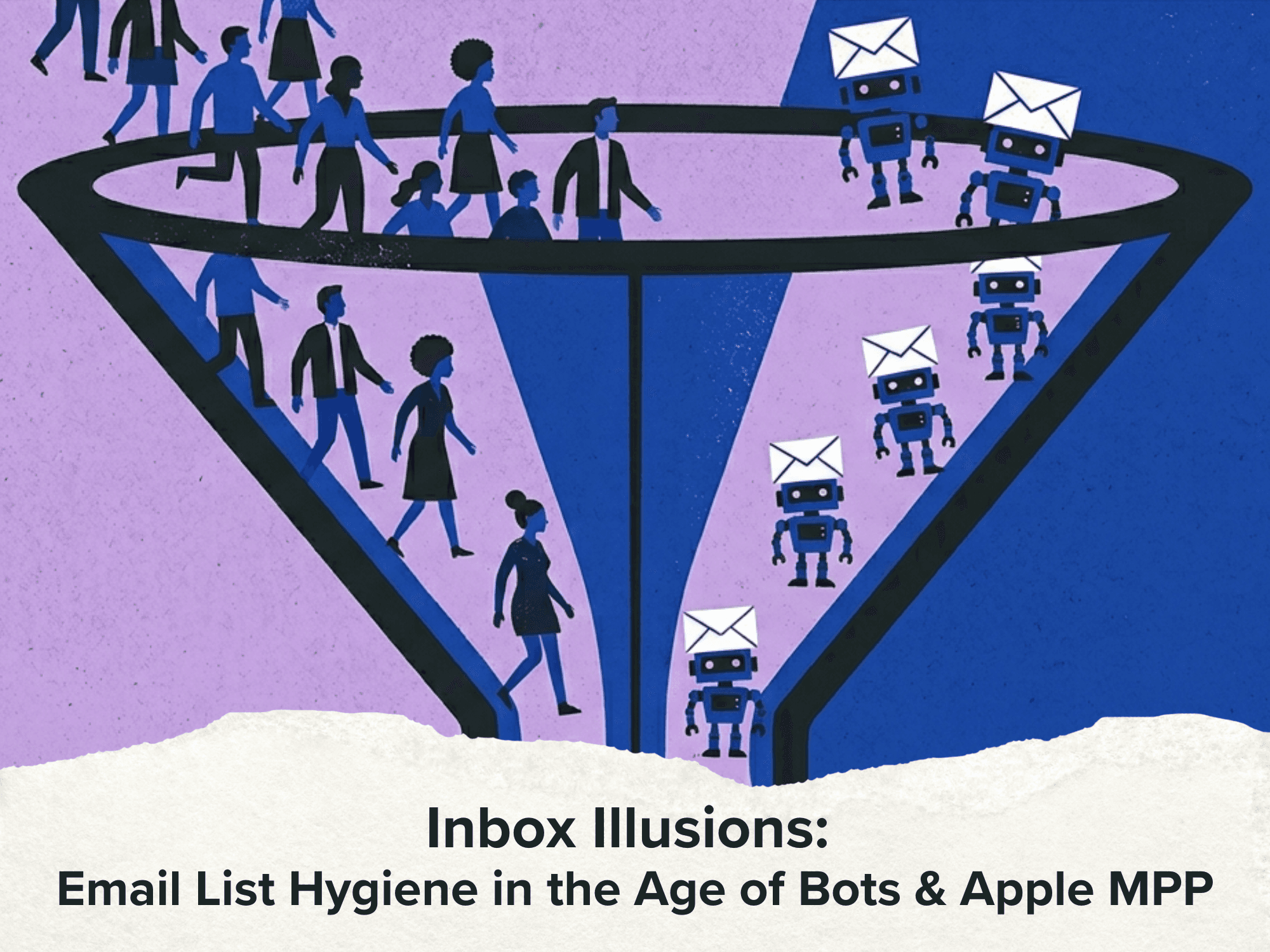
Inbox Illusions: Email List Hygiene in the Age of AI Bots & Apple MPP
How are AI bots, Apple's privacy features and corporate security software corrupting your email engagement data? And what can you do about it?

There's a number sitting in your email dashboard right now that probably feels pretty good. Maybe it's a 42% open rate. Maybe it's a click-through rate that's been ticking upward for two years. You've probably shown it in a meeting. You might have built your entire re-engagement strategy around it.
Here's the uncomfortable truth: A significant portion of that number isn’t human.
This is the era of phantom opens and fake email engagement. It's changing how every serious email and SMS marketer needs to think about list hygiene, so we’ve assembled this guide to show you how to retool how you think about your metrics.
What's Actually Happening With Email Engagement Metrics?
Since September 2021, Apple has offered a feature called Mail Privacy Protection (MPP). When turned on—and over 95% of Apple Mail users have it on—it automatically "opens" every email you send the moment it arrives. This happens whether or not a real person ever looks at it.
Let that land for a second. The majority of the "opens" your tool logs could be from a machine.
Have you witnessed your open rate jump from 28% to 55% overnight? It’s likely not because the content got better, but because MPP kicked in for a large portion of its audience. These days, you’re seeing a completely different type of engagement . . . And Apple isn't the only culprit making it happen.
The Other Engines of Fake Email Engagement
If you send to a lot of business email addresses—corporate buyers, wholesale customers, B2B leads — you've likely encountered a second invisible problem: corporate email security scanners.
Email scanners are installed by companies to protect their employees from phishing and malware. And how exactly do email scanners protect people? They automatically click every link in an incoming email before the person ever sees it, scanning each destination for threats.
To your ESP, that looks like a click . . . And a very enthusiastic one at that! Bots often click through within one or two seconds of delivery, on every single link in your email. Therefore, if you ever see a single subscriber who apparently clicked ten links in your email within three seconds of you sending it, that wasn't a person. That was a bot doing its job, so you can’t credit it with "high engagement."
There's an emerging layer of AI email assistants—Google's Gemini in Gmail, Apple Intelligence such as Microsoft Copilot in Outlook—that summarize and categorize your emails before a human reads them. Subscribers may interact with an AI email assistant’s interpretation of your message, before actually engaging with the email itself. In some cases, they may never open your message at all.
For a comprehensive guide on how AI email summaries work and tips to tailor your sends toward them, check out our blog Gmail AI Email Summaries: What’s Changing & How to Adapt.
Why Do Email Bots Wreck Your List Hygiene?
Fake email engagement, compounded over time, gets expensive.
Just think of all the nurture flows and drip campaigns that run off of engagement data:
Email platforms let you build engaged segments, based on who opened an email in the last X number of days.
Many sunset flows—those "we miss you" sequences—are triggered when someone stops opening.
Win-back campaigns, suppression logic and deliverability health are all dependent on your program's infrastructure for accurate opens and clicks.
But if the opens are fake, that house of cards falls:
You may be keeping thousands of subscribers "active" because Apple's server opened their email and they didn’t.
You may be suppressing win-back flows from people who genuinely love your brand, simply because they “read” your emails in an app that blocks pixels.
And you may be letting genuinely dead addresses—ones that haven't had a real human behind them in two years—inflate your list size and drag down your inbox placement.
Learn how to score top-billing with your inbox placement in our guide How to Rise to the Top of Gmail’s New “Most Relevant” Promotions Tab.
How to Calculate True Email Engagement
So how can you truly understand what’s engaging in email? You just need to reframe what you're measuring. No big deal. 😉
A real click means a person made a deliberate choice to interact with your content. If clicks are what you want to track, open your ESP and look for "unique clicks" on content links. These are not unsubscribes or view-in-browser links, but actual product clicks, article clicks and offer clicks.
Layer in on-site behavior, if you can. If someone clicks a link in your email and spends four minutes on your site, that's a human who’s actually browsing. Connect your email UTM data to Google Analytics or your CDP and look for session durations alongside email attributions. Short bounces (under five seconds) after an email click might indicate a bot or a broken experience.
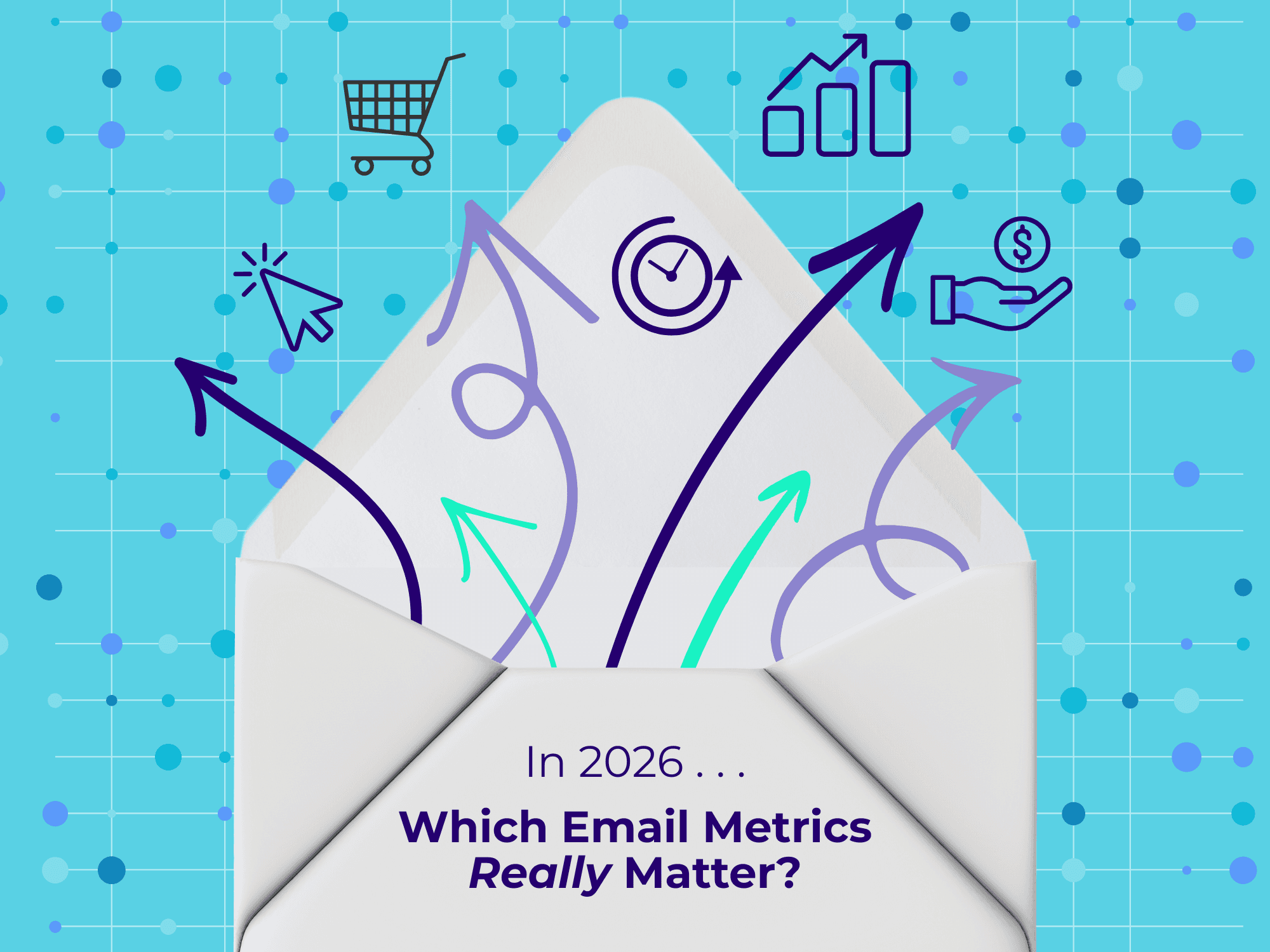
Watch for revenue signals. Who's placing orders? Who's adding to cart? Who's starting checkout? These behaviors are extraordinarily difficult to fake. Revenue per recipient (RPR)—the total attributed revenue divided by how many people received the email—is arguably the cleanest single metric in ecommerce email right now.
Use the negative signals. Your spam complaint rate must stay below 0.1% to protect your deliverability (Google's official target). Your bounce rate should stay under 2%. And here's an underused diagnostic: compare your unsubscribe rate to your click rate. If more people are unsubscribing than clicking on any given send, your email is eroding your list, not building or maintaining it.
Take a look at Metrics That Matter: How Retail Marketers Will Measure Email Success in 2026 to see all the other ways you should be tracking email metrics right now.
Rethink Your Sunset Logic
If you're currently suppressing subscribers who "haven't opened in 90 days," you may be cutting real people and keeping ghost machines in the mix.
A cleaner approach combines multiple, more nuanced signals before you sunset someone. Instead of only tracking whether people have opened an email over the last few months, combine engagement metrics to your sunsetting qualifications, such as:
No clicks in the last 90–180 days (depending on your send frequency)
No on-site activity via email in the same time period
No purchases in the same time period
Klaviyo's own recommended sunset segment uses all of these together. The logic is solid. Real disengagement shows up across multiple channels, hence why these are much safer signals to base subscriber behaviors on.
For subscribers with a purchase history, give them more time and more attempts before suppressing. For subscribers who have never purchased and show infrequent behavioral signals at all, be more aggressive. Their low engagement may not be human after all.
A Note on SMS Engagement
If all of this makes email feel like a mess, SMS is worth a look. Not because it's immune to everything. Rather, prefetching pixels don’t exist in SMS. A delivered SMS with a link click is almost always a real person making a real choice.
Klaviyo's 2026 benchmark data shows SMS flows make up about 7.6% of sends but drive 45% of total SMS revenue for top performers. The reply rate and placed-order rate for SMS are among the most reliable engagement signals available to DTC brands right now. If you're trying to re-engage subscribers who've gone dark on email, a well-timed text is likely to be a more honest read on whether someone is still there.
Texting can have its own tricky rules, so check out The SMS Compliance Checklist: Your No‑Fluff Guide to Texas SB 140 & Text Marketing Rules to make sure you get them right.
The Bottom Line
Opens were never perfect. For a long time they were useful enough, but thanks to advancements in email bots and accessibility to subscriber data, that calculus has changed.
The good news is that better metrics were always available. Revenue per recipient. Click rate on content links. On-site sessions from email. Spam complaint rate. These are the numbers that actually predict whether your email program is healthy.
Start measuring what's real by reading Metrics That Matter: How Retail Marketers Will Measure Email Success in 2026.
Or take a look at how to power your email personalization and boost your true engagement metrics with Backstroke’s predictive intelligence.

